Helping children find their words — and use them with confidence.
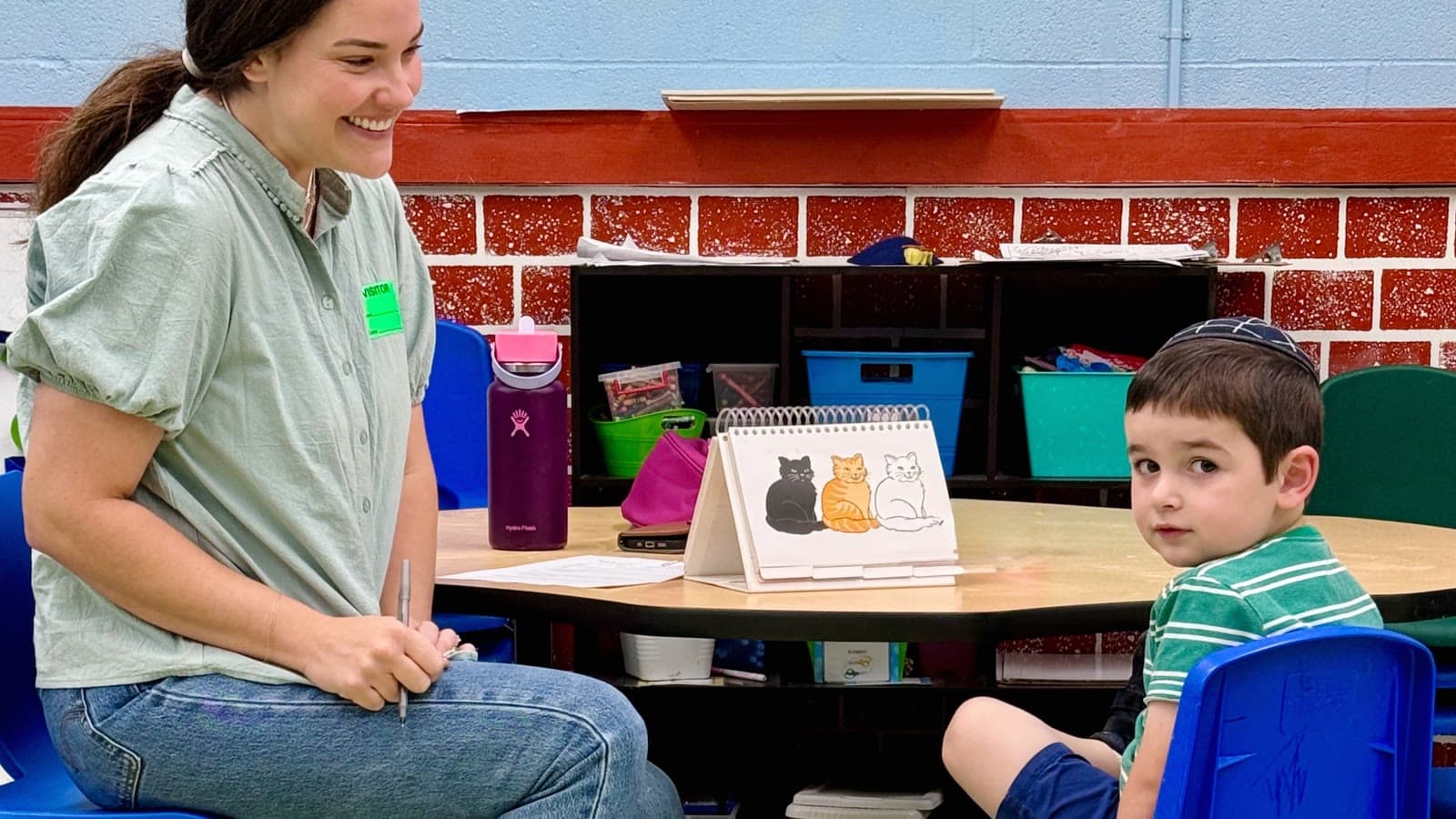
Our speech-language pathologists work with children across the full range of communication, through play-based, individualized therapy built around what motivates your child.
What we help with
- Receptive & Expressive Language
- Language Processing
- Speech Sound Disorders & Articulation
- Childhood Apraxia of Speech
- Reading & Writing / Literacy
- Early Intervention
- Augmentative & Alternative Communication (AAC)
- Feeding & Swallowing Disorders
- Social Skills
- Fluency / Stuttering
- Executive Functioning
Credentials & training
Our SLPs are licensed by Tennessee's Board of Communication Disorders and Sciences, with ASHA certification for those past their clinical fellowship. The team's expertise spans family-guided intervention, phonological disorders, telepractice, play-based and neurodiversity-affirming practices, SCERTS, and trauma-informed care — with training in feeding programs (TalkTools, Feed the Peds, My Munch Bug) and AAC systems (LAMP, Proloquo2Go, Tobii Dynavox, Grid, PECS).
What therapy looks like
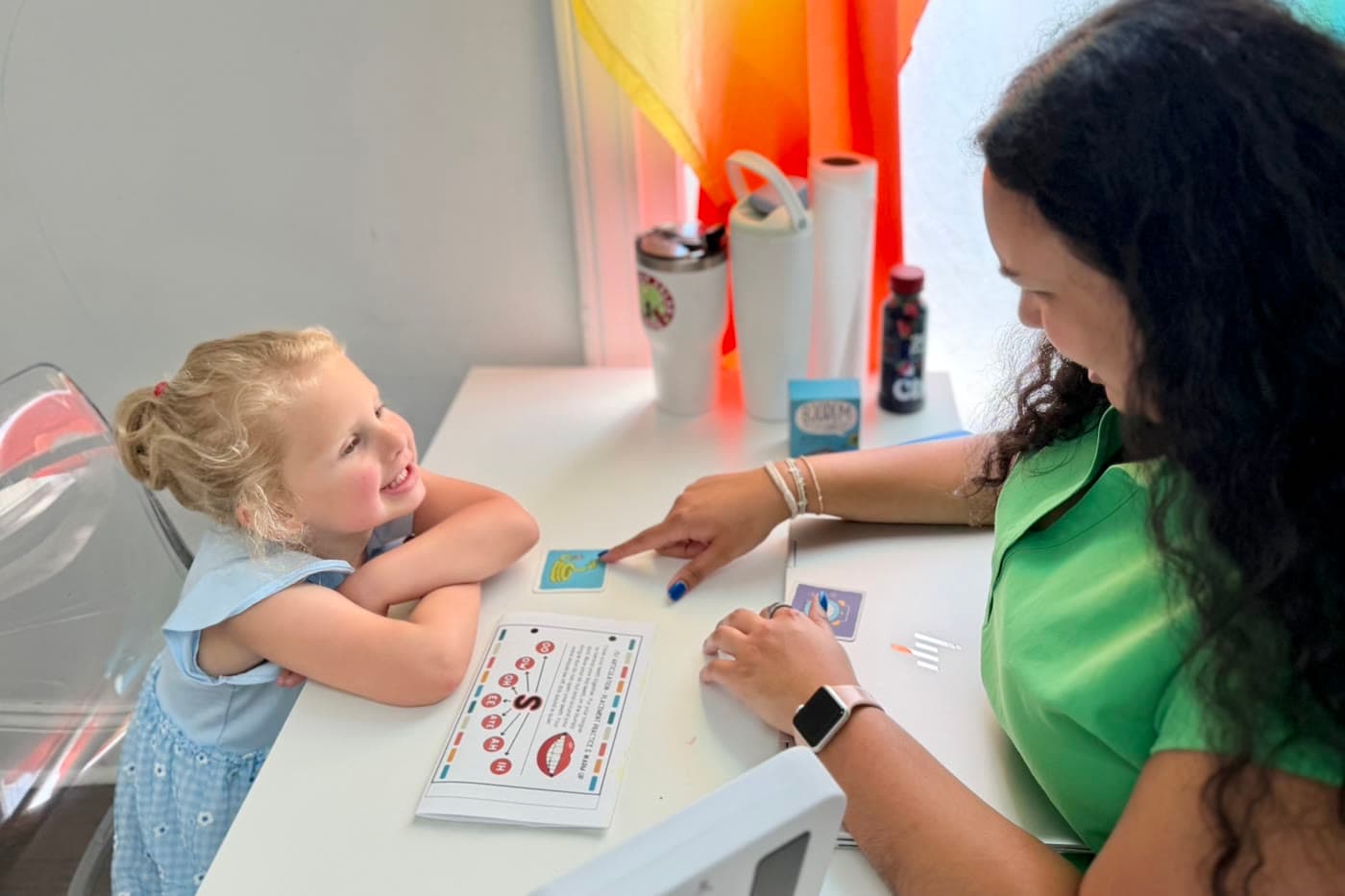
Therapy starts with an evaluation, where your speech-language pathologist gets to know your child through play and structured tasks to see where their communication is today — across understanding language, using language, speech clarity, and, where it applies, feeding and swallowing.
From there, you get an individualized plan with goals that fit your family, and regular one-on-one sessions built around what motivates your child. We keep parents in the loop with home strategies, because the fastest progress happens when therapy carries over into everyday life.
Tennessee programs & funding
Many Memphis-metro families reach our speech-language therapy team through a Tennessee program. We work with both — eligibility and covered services are determined by the state, and we’ll help you make sense of how your child’s plan fits with therapy.
Birth to age 3 · no cost to families
Tennessee Early Intervention System (TEIS)
TEIS is Tennessee's free early-intervention program for infants and toddlers (birth to age 3) with developmental delays, run by the Department of Disability and Aging. The state evaluates your child and builds the service plan (IFSP) — and when speech-language or occupational therapy is part of that plan, our team can provide it.
Under 18 · regardless of family income
Katie Beckett Program
Katie Beckett is a TennCare program for children under 18 with disabilities or complex medical needs who don't qualify for TennCare based on family income. Eligibility and benefits are set by TennCare — for families in Part A, covered benefits can include therapies like speech-language and occupational therapy. If your child is enrolled, our ST and OT teams can work with you.
Not sure whether your child qualifies? Call us at 901-654-5693 and we’ll talk it through.
Meet the team
Speech-Language Pathologists
Licensed by Tennessee's Board of Communication Disorders and Sciences, with ASHA certification for clinicians past their fellowship.
- Hannah HutchesonFounderM.S., CCC-SLP
- Shifra NashoferM.S., CCC-SLP
- Anna ShadidM.S., CCC-SLP
- Melissa FuquaM.A., CCC-SLP
- Karianne BoxellM.S., CCC-SLP
- Emory KempM.A., CCC-SLP
- Mary Elizabeth ThigpenM.A., CCC-SLP
- Claudia GonzalezM.S., CCC-SLP
- Elaina GordonM.S., CCC-SLP
- Leah WarrenM.A., CCC-SLP
- Kelby CarlsonM.S., CF-SLP
- Divya Diana Samtani KhiataniM.S., CCC-SLP
Frequently asked questions
- Do you offer feeding therapy?
- Yes. Feeding and swallowing is part of our speech-language program — our SLPs are trained in oral-motor and feeding approaches including TalkTools, the SOS Approach to Feeding, Feed the Peds, and My Munch Bug, and help with picky and selective eating, oral-motor skills, and pediatric dysphagia.
- Do I need a referral to start speech therapy?
- Yes — speech therapy requires a referral from your child's primary care provider. Have it faxed to 901-589-9001, then submit our new-client form and our team will reach out to schedule the evaluation.
- What ages do you work with?
- Our speech-language pathologists work with children from early intervention through the school-age years, including first words, late talkers, articulation, language, literacy, fluency, AAC, and feeding.
- How do I know if my child needs speech therapy?
- Common reasons families reach out include a child who isn't talking yet, is hard to understand, struggles to follow directions or put words together, stutters, or has difficulty eating a range of foods. An evaluation is the clearest way to know — reach out and we'll help you decide if it's the right step.
- Do you accept TEIS or Katie Beckett?
- Yes — for speech-language and occupational therapy, we work with families using Tennessee's Early Intervention System (TEIS) and the Katie Beckett program. Eligibility and the services covered are determined by the state, not by us, so call our office at 901-654-5693 and we'll help you understand how your child's plan works with our therapy.
- Do you take insurance?
- We accept many major insurance plans. Call our office at 901-654-5693 and we'll help you verify your child's coverage and benefits before the first visit.
From our team
Late Talker or Speech Delay? Signs Your Toddler Needs Speech Therapy
Is your toddler a “late talker,” or is it a speech delay worth acting on? How to tell the difference — and when an evaluation makes sense.
Read more →Raising a Bilingual Child: Language Development and When to Seek Help
Does growing up with two languages cause speech delays? What's typical in bilingual development, the myths worth letting go of, and the signs that warrant a closer look.
Read more →Speech and Language Milestones by Age (Birth to 5)
An age-by-age guide to the speech and language milestones most children reach from birth to five — and what to do if your child isn't.
Read more →What Is Feeding Therapy? A Speech Therapist's Guide for Parents
Picky eating or a feeding problem? What feeding therapy is, who needs it, and how our speech and occupational therapy team helps children eat with confidence.
Read more →Childhood Apraxia of Speech: Signs, Causes, and How Therapy Helps
Childhood apraxia of speech is more than a delay — it's a motor-planning problem. The signs that set it apart, and how therapy helps.
Read more →Tongue-Tie in Babies and Toddlers: Does It Affect Speech and Feeding?
Worried a tongue-tie is behind your child's feeding or speech struggles? What it is, what the evidence actually says, and when to get an opinion.
Read more →Echolalia in Children: What Repeating Words Really Means
When a child repeats words, lines from shows, or your questions back at you — that's echolalia. What it means, and why it's often a step toward language.
Read more →Receptive vs. Expressive Language: What's the Difference?
Understanding words and using them are two different skills. What receptive and expressive language are, and what a delay in each looks like.
Read more →Hard to Understand? Speech Sound & Phonological Disorders
If strangers — or even you — often can't understand your child, a speech sound or phonological disorder may be the reason. What it is and how it's treated.
Read more →How Many Words Should a 2-Year-Old Say?
The short answer: about 50 words and starting to combine them. What it means if your two-year-old isn't there yet.
Read more →Social Skills Activities for Kids: How to Help at Home
Turn-taking, reading feelings, joining play — practical ways to build social skills at home, and signs a child may benefit from more support.
Read more →When Do Babies Start Talking? A Speech Therapist's Timeline
From cooing to first words — when babies typically start talking, and the early signs worth a closer look.
Read more →How to Encourage Your Toddler to Talk: 8 SLP-Backed Tips
Eight simple, SLP-backed strategies to coax more words out of your toddler — woven into the play and routines you already do.
Read more →Baby Sign Language: Does It Help or Delay Talking?
Does teaching signs delay talking? The evidence says the opposite. How baby sign supports early communication — and how to start.
Read more →What Is AAC? A Guide to Communication Devices for Nonspeaking Kids
Will a communication device keep my child from talking? The evidence says no. What AAC is, who it helps, and how it works.
Read more →Stuttering in Children: When It's Normal and When to Get Help
Many young kids go through a stage of bumpy speech. How to tell normal disfluency from stuttering that's worth a closer look.
Read more →What Is Phonological Awareness? The Pre-Reading Skill Parents Should Know
Hearing rhymes, clapping syllables, blending sounds — phonological awareness is the foundation of reading. What it is and how to build it.
Read more →Selective Mutism: When a Child Can Talk at Home but Not at School
A child who chats freely at home but goes silent at school may have selective mutism — an anxiety-based condition, not shyness or stubbornness.
Read more →Developmental Milestones by Age (Birth to 5): A Parent's Guide
What to expect across motor, speech, social, and self-care skills from birth to five — and the signs that mean it's worth a closer look.
Read more →Following Directions: Why Some Kids Struggle and How to Help
When a child doesn't follow directions, it's not always “not listening.” The language skills behind it, what's typical by age, and how to help.
Read more →Signs of Developmental Delay: When to Worry and What to Do
The signs of developmental delay by area, when “wait and see” isn't the answer, and the concrete steps to take if you're worried.
Read more →Does My Child Need Therapy? How to Know and How to Start
Not sure if your child needs speech, OT, or PT — or how to begin? How to know when to seek help, and the exact steps to get started.
Read more →The Benefits of Early Intervention: Why Acting Early Matters
“Wait and see” is the advice parents hear most — and the research says the opposite. Why acting early matters, and what the evidence actually shows.
Read more →Sippy Cup vs. Straw Cup: What's Best for Speech and Feeding?
Spouted sippy, straw, or open cup? Why speech-language pathologists usually favor straw and open cups for oral-motor development — and how to switch.
Read more →TEIS in the Memphis Metro: Free Early Intervention for Speech & OT
What TEIS is, who qualifies (birth to 3), what it covers, and how Memphis-metro families get started — plus how it works with therapy at MTG.
Read more →
Think speech-language therapy might help your child?
Start with a short referral. Our team will reach out to schedule the evaluation and answer your questions.
Ready to take the next step?
Tell us about your child today. We’ll take it from there.